
Drinks · May 19, 2026
Cà Phê Sữa Đá: Why Vietnamese Coffee Hits Different
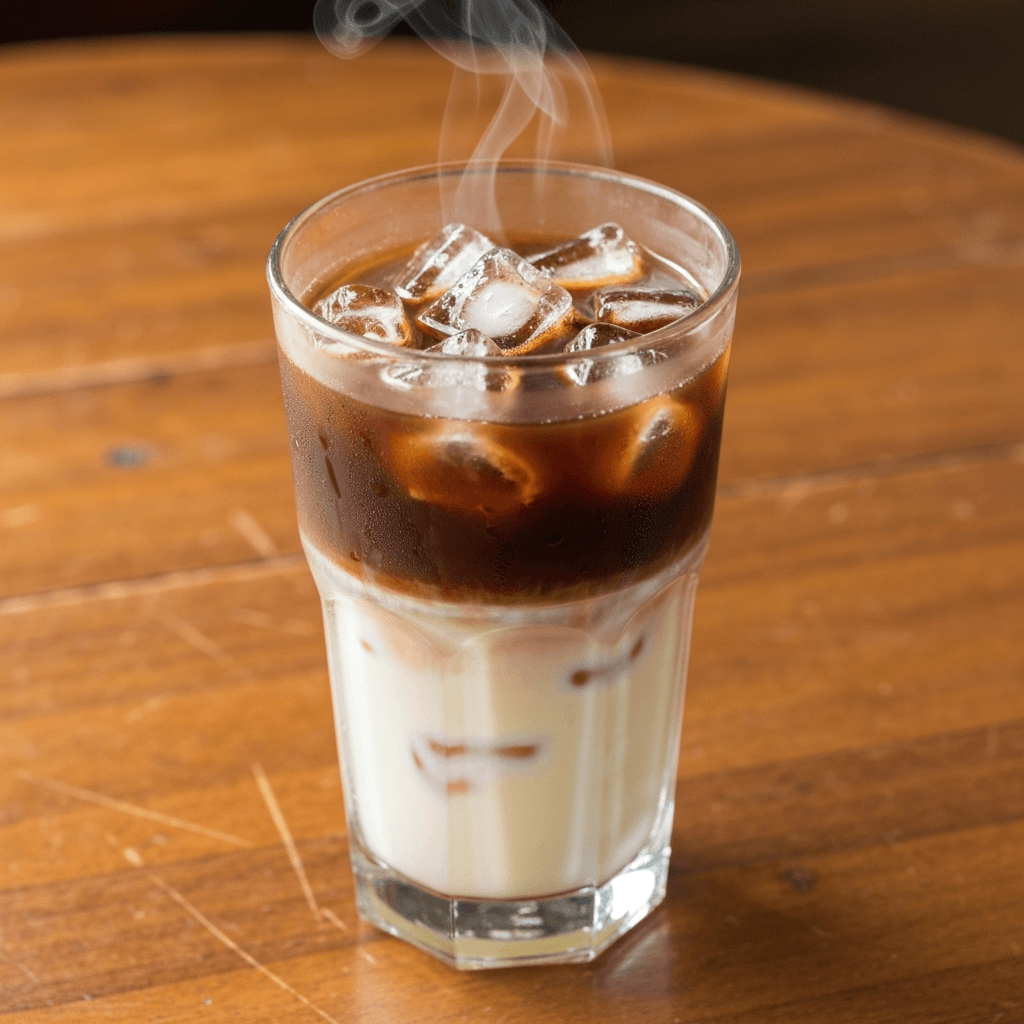
Vietnam is the world's second-largest coffee producer, and it built an entire coffee culture around slow afternoons and strong brews. One glass of cà phê sữa đá explains why.
It starts with robusta
Most American cafes brew arabica beans. Vietnamese coffee traditionally uses robusta, a hardier bean with nearly double the caffeine and a bold, chocolatey bitterness. It is a coffee with a spine, built to stand up to ice and sweetened milk without disappearing.
The phin filter takes its time
Instead of an espresso machine, Vietnamese coffee drips through a phin: a small metal filter that sits right on top of the glass. Hot water works through the grounds drop by drop, taking four or five minutes. The slow extraction pulls out deep flavor without the acidity of fast brewing methods.
That wait is part of the experience. In Vietnam, coffee is not grabbed on the way to somewhere else. You sit, you watch it drip, you talk.
Condensed milk, the stroke of genius
Fresh milk spoiled quickly in Vietnam's tropical heat, so French-era cafes reached for sweetened condensed milk instead. It turned out to be the perfect partner: thick, caramel-sweet, and strong enough to meet robusta head-on. Poured over ice, the layers of dark coffee and ivory milk are half the pleasure.
What to order at Cơm Gà Houston
Cà Phê Sữa Đá ($5.99) is the classic: dark drip coffee and condensed milk over ice. Purists can order Cà Phê Đen ($4.99), the same slow-dripped coffee served black. Not a coffee drinker? Our Trà Lá Dứa pandan tea with boba jelly and house-made Sữa Đậu Nành soy milk round out the drink list.
The best pairing we know: an iced coffee alongside a plate of cơm gà, with a Kem Bơ avocado ice cream to finish. That is a proper Vietnamese afternoon.